How Daily Routines Shape Your Success
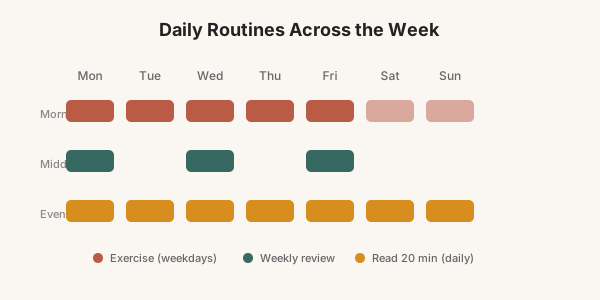
Every high performer — from athletes to CEOs — has one thing in common: consistent daily routines. Routines reduce the number of decisions you need to make, freeing mental energy for creative and strategic thinking.
The Science Behind Routines
When you repeat an action consistently, your brain forms neural pathways that make the action automatic. This is why brushing your teeth doesn't require willpower — it's a deeply ingrained habit. The same principle applies to exercise, reading, meditation, or any productive behavior.
Building Effective Routines
- Start small. Don't try to overhaul your entire day. Add one routine at a time.
- Attach to existing habits. "After my morning coffee, I'll read for 15 minutes." This technique, called habit stacking, dramatically increases success rates.
- Track completion. Seeing a streak of completed routines creates positive reinforcement that keeps you going.
- Be specific. "Exercise" is vague. "30-minute run at 7 AM" is actionable.
Morning, Midday, and Evening
The most effective routine systems cover three time blocks:
- Morning: Set the tone for your day. Stretch, plan, review your top 3 priorities.
- Midday: Reset and recharge. Take a walk, review progress, adjust your schedule.
- Evening: Wind down and reflect. Read, journal, prepare for tomorrow.
"We are what we repeatedly do. Excellence, then, is not an act, but a habit." — Aristotle
Track Routines in PodoTodo
Set a routine up as a repeating event with its own time and rule — daily, weekly on the days you choose, every other week, monthly or yearly. Tick it off each day and watch your consistency grow; completion is recorded per day, so one missed morning never wipes the streak behind it. Repeating events appear automatically on the calendar and schedule, so they are part of the plan rather than a separate list. When you combine well-designed routines with the Top 3 priorities method and time blocking, the foundation is in place — your system decides what's next so you don't have to.